You keep circling the same conversation
There is plenty of analysis, but decisions are repeatedly deferred, reopened or handed elsewhere.
Facilitation sprints · 4–6 weeks
A sprint gives a cross-functional team the structure, pace and protected space to untangle a complex problem, test practical solutions and make the decisions that keep getting deferred.
One focused, cross-functional rhythm from problem to tested change.
What is a facilitation sprint?
A sprint is a focused, time-bound way of creating movement around an adaptive challenge.
It is not a single methodology or simply a faster project plan. It creates a temporary structure in which a team can step outside its normal rhythm, examine the whole system and test decisions while the work is still live.
I join the team for a concentrated period, hold the overall process and help people move repeatedly between understanding, making, testing and deciding.
The pace matters, but speed is not the point. The aim is to shorten the distance between a useful insight and doing something with it, without flattening complexity or leaving quieter perspectives behind.
Good enough to test
beats perfect on paper.
When a sprint helps
A sprint is useful when the issue crosses teams, the current process has become slow or nobody has enough space to look at the whole system.
There is plenty of analysis, but decisions are repeatedly deferred, reopened or handed elsewhere.
Different functions own small parts, while nobody can see or improve the whole.
The answer cannot be designed perfectly on paper. It has to meet real work, real partners or real users.
The existential issues matter, but the team also needs enough containment to make progress now.
Sprint or workshop?
A workshop can create alignment or make a defined decision in a day. A sprint is for work that needs iteration between conversations.
| Workshop | Sprint | |
|---|---|---|
| Best for | One defined outcome | A connected system or process |
| Rhythm | One or several sessions | Weekly cycles over four to six weeks |
| Between sessions | Limited follow-up | Focused work, testing and learning |
| Typical output | Agreement and next actions | A tested new way of working |
The sprint process
Each sprint follows a deliberate progression, while the work inside it adapts as the team learns.
Week 0–1
Clarify the challenge, the decision space, who needs to be involved and what useful progress would look like.
You leave withA shared sprint brief, clear boundaries and agreed measures of progress.
Week 1–2
Map the real system, hear different perspectives and identify where friction, assumptions or missing information sit.
You leave withA visible picture of the current system and the leverage points within it.
Week 2–4
Create tangible alternatives, workflows, tools, criteria or ways of working, and test them with the people who will use them.
You leave withWorking prototypes and evidence about what needs to change.
Week 4–5
Use what the team has learnt to resolve trade-offs, make clear choices and agree the new approach.
You leave withRecorded decisions, clear ownership and a practical route to implementation.
Week 5–6
Put the new approach into practice, capture the learning and make ownership explicit before the sprint closes.
You leave withUsable tools, a learning record and a team able to continue without me.
What the weeks feel like
I become part of the team’s rhythm: facilitating the important conversations, supporting workstreams and keeping the whole challenge visible while people test pieces of it.
Structure holds the pace.
The team does the thinking.
Share evidence, make sense of what has changed and decide the next focus.
Small groups build, try and gather feedback in the real context.
Bring the evidence back, refine the approach and make the next decision.
Working together
What comes out of it
The exact outputs depend on the challenge. Every sprint is designed to leave the organisation with practical evidence, decisions and tools, not reliance on an external facilitator.
The process, relationships, hand-offs and hidden blockers made visible in one place.
Not a theoretical recommendation: a workflow, tool, decision framework or approach that has met real work.
What was agreed, why it was agreed and where genuine uncertainty or disagreement remains.
Templates, criteria, maps, prompts or working agreements designed for continued use.
What worked, what did not, what changed during testing and what the organisation should watch next.
Clear ownership, immediate next actions and a sensible rhythm for review and iteration.
What makes it different
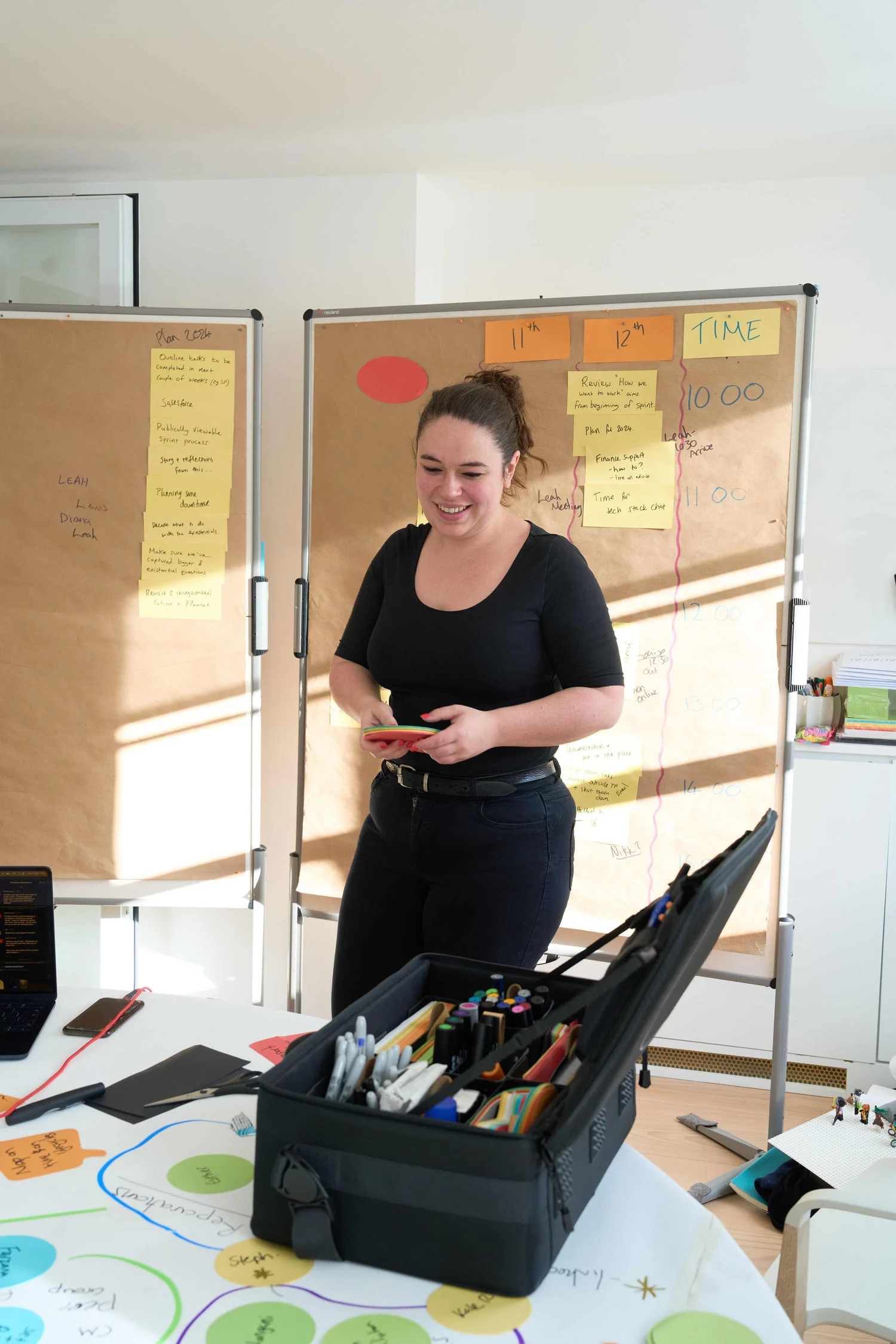
I become part of the team’s weekly rhythm: facilitating sessions, supporting workstreams, helping people test prototypes and making the learning visible as it happens.
 Sprint in action
Sprint in action
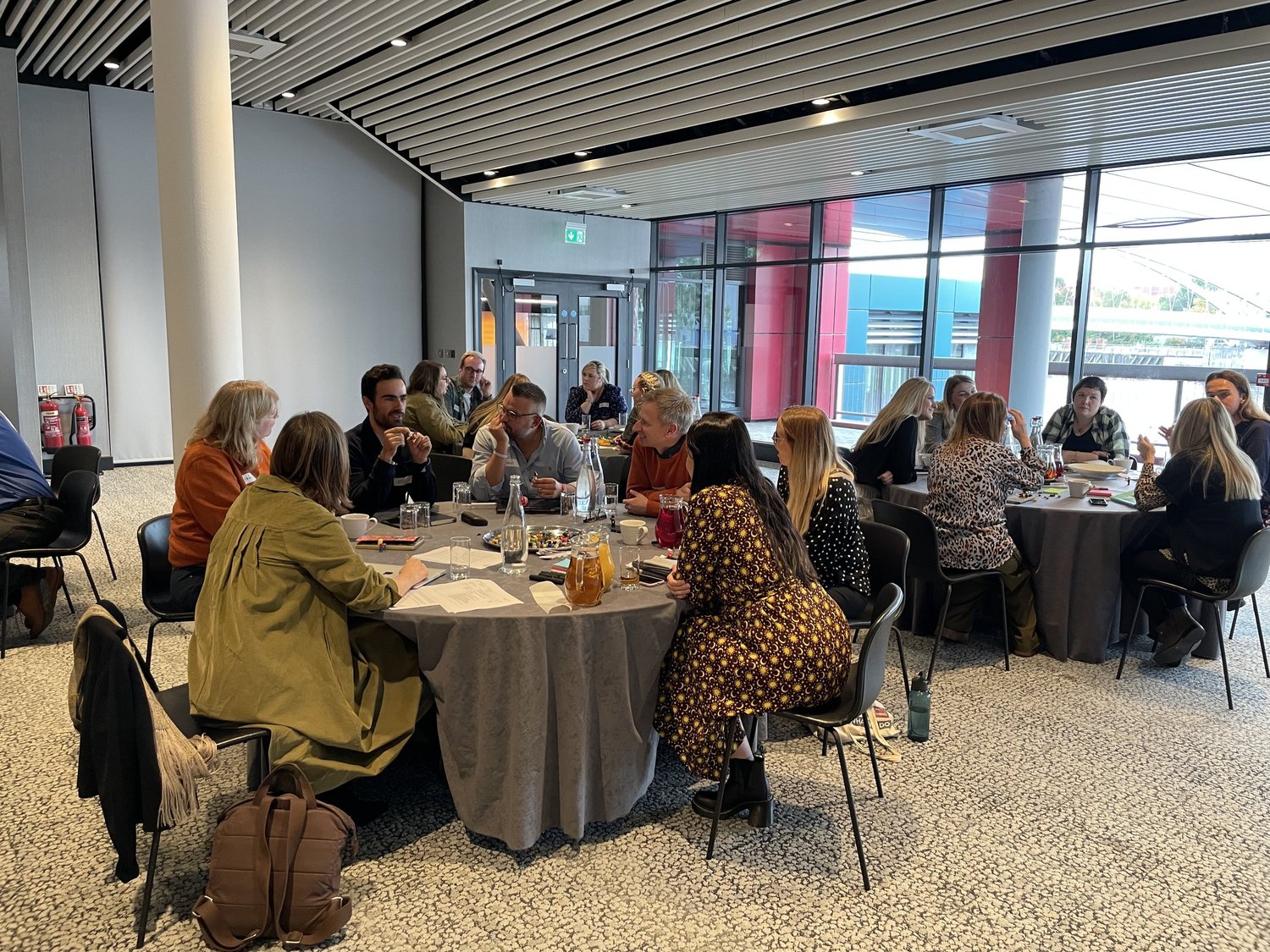
An independent grantmaker redesigned its funding process while live rounds continued to move through it. Programmes, learning, legal, finance and operations worked together to test a faster and more useful approach.
Practical questions
No. Four to six weeks is the usual shape, but the right length depends on the decision, the people involved and how quickly the team can test work in the real context.
There is normally one facilitated working session each week, plus focused work between sessions. I agree the rhythm and expectations before the sprint begins so people can protect the right amount of time.
Yes. The format follows the team and the work. Some sprints combine shorter online working sessions with focused in-person days; others can run fully online.
A small cross-functional core team works best, with access to a decision sponsor and the people who use, deliver or experience the process. Not everyone needs to attend everything.
That is common. The opening stage creates a shared sprint brief and tests the assumptions behind the challenge before the team starts designing answers.
The final phase makes ownership, review points and next actions explicit. The aim is for your team to continue using and improving the new approach without needing me in the middle of it.
Let's work together
You do not need to know the solution, or even have the problem perfectly framed. Start by telling me where the work is getting stuck.
Talk through your challenge